


OptiLight for Dry Eye in Coronado
Treating the Cause of Dry Eye
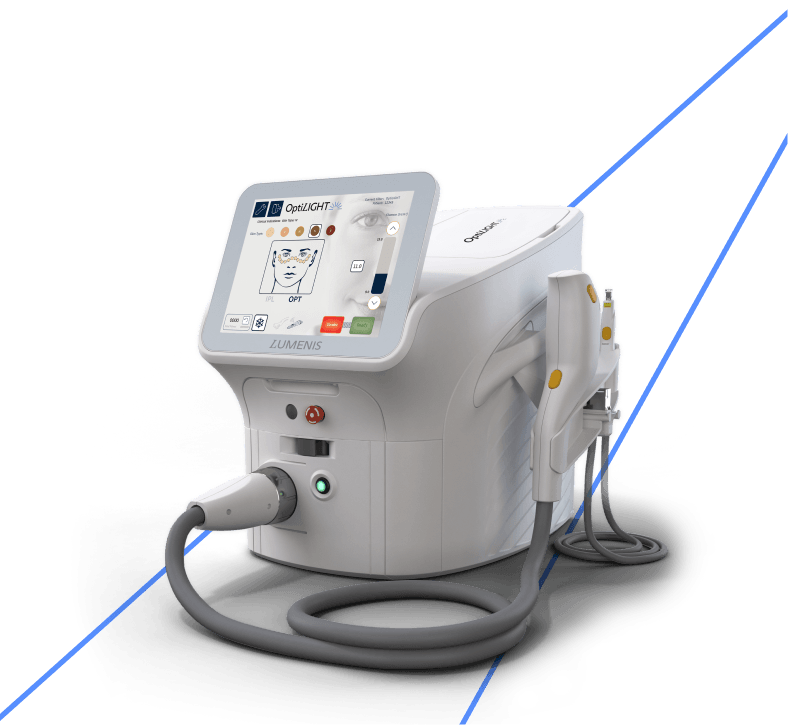
OptiLight by Lumenis uses intense pulsed light to address one of the most common underlying causes of dry eye. The treatment targets inflammation along the eyelid margin and may help restore normal function to the meibomian glands, which produce the oil layer that keeps tears from evaporating too quickly.
This matters because most dry eye is not a tear production problem. It is an evaporation problem, driven by glands that have become blocked or inflamed. Drops manage the symptom. OptiLight is aimed at the mechanism behind it.

What to Expect From Treatment
Sessions take about fifteen minutes. Protective shields cover your eyes and a cooling gel is applied to the treatment area across the cheeks and lower eyelids. Each pulse of light feels like a brief warm snap, and most patients tolerate it easily without any numbing or preparation beforehand. There is no recovery period, so you can return to work or your normal routine straight from your appointment, and there are no drops or ointments to remember afterward.
A standard course is four sessions spaced two to four weeks apart, and many patients begin noticing improvement partway through rather than only at the end. A secondary benefit is common as well: the same light energy that calms eyelid inflammation may also reduce facial redness and the appearance of small visible vessels across the cheeks and nose. It is not the reason most patients come in, but it is a welcome one, and it is part of why OptiLight sits comfortably in a practice that treats both the eyes and the face around them.
Treating the cause of dry eye rather than managing the symptom, with a benefit your skin may notice too.
